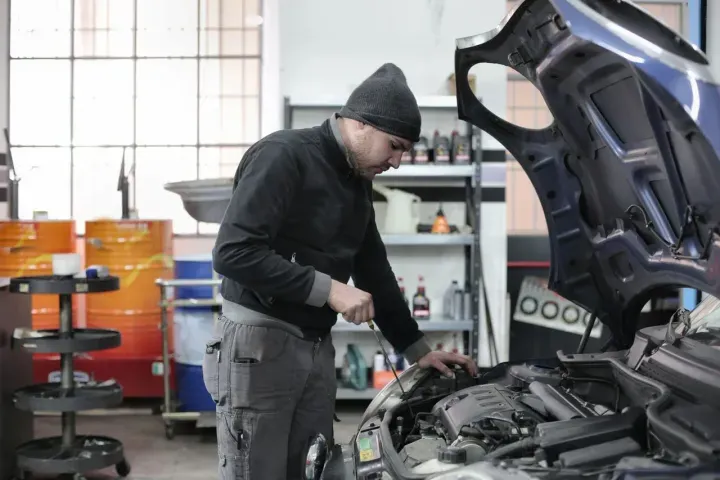
A leaking or clogged radiator can push the engine to overheat and cause serious engine damage, so the first symptom should not be ignored. At Gözde Oto Klima in Bursa we handle radiator repair, coolant-leak repair and radiator replacement with an expert team. We first pinpoint the leak with a pressure test, repair small cracks and pinholes by soldering or special epoxy, and if the damage is major we recommend a new or sound used radiator. After every repair we confirm the seal with a pressure test. We serve all makes and models with no appointment and guaranteed workmanship, and we discuss a budget-appropriate solution openly before starting. If your car is running hot, bring it in without delay.
How Is a Radiator Coolant Leak Repaired?
Small cracks or holes can be repaired by soldering or applying specialized epoxy. Gaskets at the tank-core connection are replaced to stop seepage. When damage is extensive, the radiator is replaced entirely. After every repair a pressure test is performed to confirm the seal.
Clogged Radiator and Replacement
In vehicles where coolant has not been changed for a long time, radiator channels clog with rust and sediment, reducing cooling capacity. Pressure flushing can clear minor blockages; however, severe clogging or structural deformation makes radiator replacement necessary. With both new and quality used radiator options, Gözde Oto Klima provides a solution that fits your budget.
Frequently Asked Questions
Is radiator repair or replacement more cost-effective? +
For minor damage, repair is usually more economical. However, the decision depends on the radiator's age, extent of damage, and parts availability.
What should I do if my car is overheating? +
Stop the engine immediately and let it cool. Then check the coolant level. If you see a visible leak or steam from the radiator, do not drive the vehicle — bring it to a specialist.
Radiator Repair and Replacement: The Bursa Service That Protects Your Car from Overheating
Watching the temperature needle climb toward the red zone is a sight no driver wants to see: overheating is the first link in a chain that can end in serious engine damage. At the head of that chain is usually a radiator that has grown worn, leaking, or clogged. Radiator repair means fixing coolant leaks in this lifeline of the cooling system, clearing blocked channels, and replacing the radiator when needed. At Gözde Oto Klima, we have spent years in Bursa solving overheating complaints at the source and verifying every repair with a pressure test.
What Does a Radiator Actually Do?
As an engine burns fuel it generates heat that must be kept under control. The water pump circulates antifreeze-mixed coolant through the engine block; once heated, it flows into the radiator, where air moving through the thin fins, helped by the fan, cools it before it returns to the engine. The radiator is this loop's heat-release point, so engine temperature depends directly on its health. Clogged fins or a leak-driven drop in coolant stop heat from escaping, and a failing thermostat or fan can overheat the car even with a sound radiator.
Why Do Radiators Leak or Clog?
The most common cause of a leak is the gasket where the plastic tank meets the aluminum core, which hardens and starts to seep over time. The second is stone and gravel puncturing the thin fins, not at all rare on Bursa's construction-site roads and intercity traffic. Third, antifreeze left unchanged for years turns acidic, corrodes the radiator from within, and clogs the channels with rust and sediment. A clogged radiator can look fine outside while its internal flow has quietly dropped, and in freezing weather, too little antifreeze lets the coolant freeze, expand, and crack the tank.
Signs That Point to a Radiator Problem
The clearest warning is the temperature gauge climbing above normal, especially while the car idles in traffic. A green, orange, or pink puddle with a faintly sweet smell under the car is a classic leak sign. Coolant that keeps dropping in the expansion tank, steam from under the hood, or a sweet smell from the heater vents also point to coolant loss. A gurgling sound at startup means air has gotten into the system. Whenever you notice any of these signs, do not push the car further: overheating can turn a cheap repair into a full engine rebuild.
How Is a Radiator Coolant Leak Repaired?
Repair always starts with an accurate diagnosis. We connect a pressure test pump to pinpoint exactly where the leak is, since some leaks stay invisible until pressurized. Small cracks and pinhole leaks can often be fixed permanently with soldering or specialized epoxy, depending on the damage. Leaks at the tank-to-core joint are fixed by renewing the gasket and re-tightening the connection, though corrosion or crushing spread over a wide area will not hold a repair. Afterward we re-pressurize the system and test it for leak-tightness, then refill it with the correct antifreeze ratio and bleed it.
When Should You Repair, and When Should You Replace?
The decision depends on how extensive the damage is and how old the radiator is. A small single-point leak or mild clogging is usually solved with a repair, far cheaper than replacement. But if the core has corroded widely, leaks from several points, or has been crushed, a repair only buys time before new leaks appear, and full replacement becomes both safer and more economical. When replacement is the answer, we offer a brand-new radiator for a long service life and warranty, or a sound used radiator for a tighter budget. We source the part quickly through our spare-parts service.
Water Pump, Thermostat, and Fan: The Radiator's Partners
A radiator never works alone; the cooling system is a team effort. If the water pump is not circulating coolant, even a new radiator is useless, and a pump leaking from its seal causes both coolant loss and overheating. A thermostat stuck open makes the engine slow to warm; stuck closed, it can make the car boil over suddenly. A failed fan or fan relay stops cooling almost entirely once the car is stationary in traffic. That is why an overheating complaint gets these supporting parts checked too, since the real cause is sometimes one of them rather than the radiator.
The Real Damage Overheating Does to Your Engine
The reason to take a radiator problem seriously is how expensive the consequences can get. When an engine overheats, the cylinder head gasket is usually the first casualty: coolant and oil start mixing, and white smoke appears from the exhaust. Left further, the head can warp, the block can crack, and the job turns into a full engine rebuild. Yet that starting leak is usually small and cheap to fix. Simply topping up water again and again is the riskiest choice, since the damage grows as coolant runs low. If your car tends to run hot, a car AC service and cooling-system check protects your wallet.
Coolant Quality and the Role of Regular Maintenance
The single biggest factor in a radiator's lifespan is the quality of the fluid inside it. Antifreeze does more than stop freezing in winter: it prevents corrosion year-round, lubricates the pump, and raises the coolant's boiling point. Antifreeze diluted with tap water or left unchanged for years slowly rots the radiator from within, and mixing antifreeze types can cause gelling. That is why, after every radiator repair, using the correct antifreeze at the correct ratio is essential for the work to last. Renewing the coolant every two years, or per the manufacturer's interval, keeps the radiator and heater core running trouble-free.
What to Do If Your Car Overheats on the Road
If the needle creeps toward red while driving, the first rule is not to push the engine any harder. Pull over somewhere safe, shut the engine off, and let it cool; never open the radiator cap while the engine is hot, since scalding water can spray out and cause serious burns. Once the engine has cooled, check the coolant level in the expansion tank. If there is a visible leak or steam, it is safer to have the car towed than to keep driving. Call us and we can give you preliminary guidance and the safest next step.
What Determines the Price?
The cost of radiator work varies a great deal depending on what is actually wrong. A simple gasket repair and a full replacement naturally sit at very different price points, and new-versus-used pricing depends on your choice. The car's make and model, part availability, and whether a component like the water pump or thermostat also needs attention all affect the final price. After inspecting the car we give you a clear estimate and never start work without your approval — it is why drivers have trusted us in Bursa car AC and cooling systems for years.
Why Choose Gözde Oto Klima?
The cooling system does not forgive mistakes, so the work has to be measured, tested, and never rushed. We verify every repair with a pressure test and run the engine before handover to watch how it behaves under heat. Even without an appointment we try to look at your car quickly, and we never start work without explaining what we are doing. Because we handle AC gas, heater systems, and radiators under one roof, your car's entire climate and cooling system gets sorted in one place. If your car shows the smallest sign of running hot, stop by early.
In Short
If your car is running hot or you see a coolant stain underneath it, putting off the problem is the most expensive choice you can make, since overheating can turn a small radiator leak into real engine damage. A proper radiator repair means finding the leak with a pressure test, fixing or replacing as needed, and confirming the work with a test afterward. Checking the water pump, thermostat, and fan alongside the radiator prevents unnecessary expense, and regular antifreeze maintenance keeps it free of clogging for years. Your engine is your car's most expensive part, so look after its first line of defense early.
The Radiator Cap's Small but Critical Role
The radiator cap is a part most drivers never think twice about, yet it is the key component regulating pressure in the cooling system. The system runs under set pressure specifically to raise the coolant's boiling point; once the cap's spring wears out, that pressure cannot hold, and coolant boils and overflows at a lower-than-normal temperature. The radiator itself can look fine outside while a faulty cap is the real reason the car keeps overheating. That is why any overheating complaint gets the cap checked too, a cheap but effective inspection point.
Fan and Fan Relay: The Key to Cooling When the Car Is Stopped
While the car is moving, natural airflow over the radiator helps with cooling; once you stop in traffic, that airflow disappears and the fan has to take over. If the fan does not run, even the healthiest radiator falls short once the car is stationary. When the fan relay fails, or the fan motor burns out, the car stays cool on the move but overheats sitting in traffic, a typical pattern. So when a car "only overheats in traffic," we check the fan system before the radiator, since finding the right part prevents an unnecessary radiator repair expense.
Air Locks and Proper Bleeding
One of the most common issues after any cooling-system work is air trapped inside as bubbles. This air lock blocks coolant from circulating properly, and the car can overheat locally even with a completely clean radiator. That is why, after any coolant change or repair, properly bleeding the system, clearing out the trapped air, is essential. A rushed job with incomplete bleeding tends to come back as overheating a few days later. After every job we run the engine up to temperature and watch the fan kick in and the coolant level settle.
Cleaning the Radiator's Outer Surface
Not every radiator problem is internal; sometimes the outside of the fins gets clogged with bugs, leaves, plastic bags, and road grime. That external buildup blocks airflow and reduces cooling, which tends to cause overheating especially in summer. Because the condenser sits right in front of the radiator, this layer of dirt affects both engine cooling and AC performance together. Cleaning the radiator and condenser surface during maintenance is easy to overlook but has real impact. As a car AC service covering both cooling and air conditioning, we tend to spot and fix these shared problems in one visit.
Winter Freeze Risk and Coolant Ratio
A radiator needs attention not just in summer but in winter too. Too little antifreeze in the coolant lets the water in the mix freeze, expand, and crack the radiator, hoses, or even the engine block, one of the most expensive failures there is. The correct antifreeze ratio should be set for the coldest nights your region sees, which matters especially in Bursa's harsh winters. Antifreeze also delays boiling in summer, protecting the system year-round. Topping up a low coolant level with plain tap water instead of purified water weakens freeze protection and clogs the radiator with limescale.
Automatic Transmission Coolers and the Radiator
In many automatic-transmission cars, the transmission fluid is cooled through a separate chamber built into the radiator itself. An internal leak there lets coolant and transmission fluid mix, a serious problem for both engine cooling and the transmission. The telltale sign is usually an oily sheen in the expansion tank or a change in the transmission fluid's color. In cases like this, getting the diagnosis right matters even more, since a wrong call can put two expensive systems at risk at once. We keep this possibility in mind whenever we assess a radiator.
How Long Does a Radiator Last?
How long a radiator lasts depends on the materials used, how consistently it is maintained, and the conditions it operates in. One that gets regular antifreeze changes and clean coolant can give years of trouble-free service, while a neglected radiator corrodes and clogs much sooner. Stop-and-go city traffic and heavy loads put extra strain on the system. The radiator's age also factors into whether repair or replacement makes more sense: for one nearing the end of its life, replacing it is often the more sensible choice.
What to Check When Buying a Used Radiator
A used radiator is a budget-friendly solution that makes sense when chosen carefully, but picking one at random usually leads to disappointment quickly. A good used radiator should have fins free of dents or corrosion, no signs of leaking at the joints, and should have been tested for internal blockage. Every used part we sell is checked for functionality first; when we call it sound, it is. We source whatever radiator or cooling part you need through our spare-parts service, and we work out together whether new or used suits your car's age and budget.
Engine Checks After an Overheating Incident
If a car has overheated seriously, repairing the radiator alone may not be enough; it is also necessary to check whether the overheating damaged the engine itself. We assess the cylinder head gasket, whether oil and coolant have started mixing, and whether the engine runs smoothly under heat. In most cases, overheating caught early leaves no lasting damage, but an engine that kept running while overheating needs a more thorough check. So when you bring a car in after an overheating incident, we do not just seal the leak and send you off; we go over the whole system.
Frequently Asked Questions
Drivers often ask whether they can just keep topping up with water and keep driving; the answer is no if there is a visible leak or steam, since that can become an engine failure. Another common question is whether a radiator repair is permanent: one done with the right method and verified with a pressure test is, while quick fixes that skip that step are not. The right antifreeze-to-water ratio, not straight water, is the correct choice year-round. Feel free to ask us anything; a good Bursa car AC and cooling service starts by informing the driver properly.
One Small Step That Protects Your Engine
The cooling system works so quietly that it usually goes unnoticed, until the day the needle starts climbing. Yet a regular check and a small, timely radiator repair protect your engine, the single most expensive part of your car, from major damage. The moment you notice a puddle under your car, a tendency to run hot, or coolant dropping in the expansion tank, consulting a specialist instead of putting it off is always the most economical path. That is exactly where we come in: measuring, testing, and explaining honestly, because protecting your engine matters to us too.
Think of Cooling and AC as One System
The radiator and the air conditioner are two systems working side by side at the front of the car: one keeps the engine cool, the other keeps the cabin cool. That is why, when a car comes in for a radiator repair, it is often worth checking the AC side too, since a clogged condenser affects both cooling and overheating behavior. Catching an approaching AC gas refill need in the same visit saves you from summer surprises. Even a simple AC gas refill is worth evaluating with the whole cooling system in mind.
Written by: Sabri Özdemir · Auto AC Technician, Gözde Oto Klima·Last updated:
We use cookies
We use cookies to give you a better experience and measure visit statistics. By accepting, you allow analytics cookies. Privacy Policy