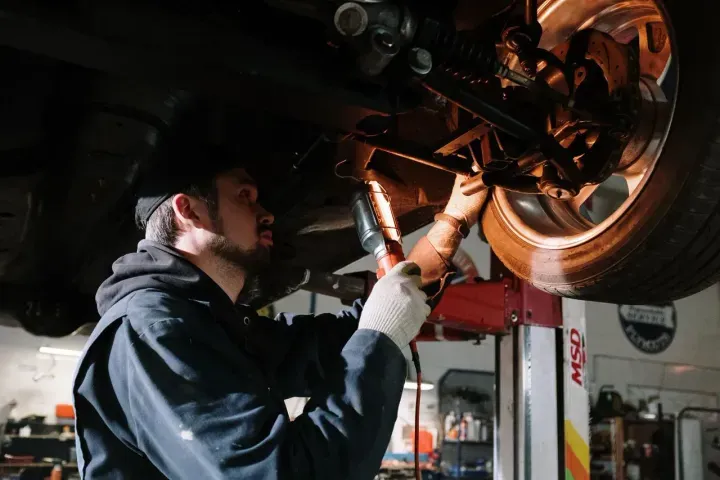
If your car's heater no longer warms the cabin, the usual culprit is a heater core clogged with scale and sediment. At Gözde Oto Klima in Bursa we run heater system cleaning and core flushing only after a correct diagnosis: we confirm whether the problem is really a blocked core or instead the thermostat, the water pump or air trapped in the system, then clear it with pressure flushing and, when needed, chemical cleaning. When we're done we check the coolant and antifreeze level, and we serve every make and model with no appointment and guaranteed workmanship. Having your heater checked before winter sets in is the smartest timing for both comfort and engine health.
What Is Heater Core Cleaning?
The heater core is a small heat exchanger through which engine coolant circulates to warm the cabin. Over time, scale, rust, and sediment clog the core, reducing or completely blocking heat output. Using pressure flushing and chemical cleaning methods, the system is effectively restored.
When Should the Cooling System Be Flushed?
A cooling system flush is recommended if the heater produces little heat, the coolant has turned brown or murky, or the engine tends to overheat. As a general rule, coolant maintenance every 40,000-60,000 km or two years is sufficient, though heavy sediment build-up may require more frequent service.
Frequently Asked Questions
How long does heater core cleaning take? +
The service typically takes 1-2 hours; heavily clogged cores may require a bit more time.
Should the heater core be cleaned or replaced? +
If there is no structural damage or leak in the core, cleaning is usually sufficient and far more cost-effective. Physical deformation or a leak would necessitate replacement.
Heater System Cleaning in Bursa: The Real Reason Your Car Won’t Warm Up, and How to Fix It for Good
When the blower won’t warm up in winter traffic, most drivers blame the thermostat — but the real culprit is usually the heater core, its narrow channels slowly filled with scale, rust, and sediment. Heater system cleaning reopens that clogged core and the contaminated coolant circuit with pressure flushing and chemical solvents. At Gözde Oto Klima we’ve done this work in Bursa for years, usually handing the car back the same day. This article covers why the core clogs, its symptoms, how the cleaning works step by step, what sets the price, and when replacement is needed instead.
What Does the Heater Core Do, and Why Does It Clog?
Cabin heat doesn’t come from a separate heater — it’s drawn from the engine’s own coolant, which passes hot through the heater core, a small heat exchanger behind the dashboard, as the blower pushes air into the cabin. The core is a miniature radiator built from hundreds of hair-thin channels, and that thinness makes it both efficient and vulnerable. When antifreeze isn’t replaced on schedule, its additives break down, the coolant turns acidic, and a muddy sediment of rust — shed from the engine block, water pump, and thermostat housing — builds up inside. The core has the system’s tightest passages, so sediment settles there first, while the radiator still flows freely.
In a city like Bursa, where winters are harsh and elevation varies between districts, cars are often left idling on cold mornings — a habit that speeds sediment build-up. As the channels narrow, heat transfer drops, and the blower eventually puts out lukewarm or cold air. The clog rarely happens overnight; it creeps up over two or three winters, with the driver thinking “it’s heating a bit less this year” while the core quietly closes off channel by channel. That’s why a routine car AC service check is worth having early, before it becomes a full blockage.
These Symptoms Mean Your Heater Core Is Clogging
The most familiar sign is a blower that won’t put out properly hot air even at full engine temperature — but it’s not the only clue. Fogged windows that won’t clear, warm air from just one side of the cabin, a sweetish smell from the footwell, a damp carpet, or an oily film on the windshield all point to a core losing efficiency or starting to leak — and a leak calls for replacement, not cleaning. A tendency to overheat alongside the heating complaint is another clue, since the same sediment may affect the radiator too, so we check the whole cooling system on any heater complaint, with a separate radiator repair assessment if needed.
Heater System Cleaning Step by Step: How It’s Done
The process starts with a cold car, since working on pressurized coolant in a hot engine isn’t safe. First, the system is depressurized and the antifreeze checked for color and consistency — coolant turned brown with floating particles shows how contaminated it’s become. The core’s hoses are disconnected and hooked to the flushing equipment, and pressurized water and air are run backward through the core, against its normal flow, to loosen the packed sediment — a reverse-flush that breaks the blockage apart and forces it out, rather than packing it tighter.
For stubborn scale and oily residue, a chemical solvent is circulated through the system, left to work, then flushed out with plenty of water. Once the core is clear, we clean the rest of the circuit too — water jackets, radiator, hoses — so contaminated coolant doesn’t flow back into the core we’ve just cleaned. Finally, the system is refilled with the correct ratio of antifreeze and purified water, bled to prevent trapped air, and run to operating temperature to check blower temperature, gauge reading, and any leaks. The whole process usually takes one to two hours, longer for heavier blockages.
Cleaning or Heater Core Replacement — Which Do You Need?
Not every clogged core needs replacing — in most cases a thorough cleaning is enough, and costs far less. Sediment-packed channels with a sound body respond well to pressure flushing and chemical cleaning, but a visible crack, seeping seam, or impact damage means cleaning only offers temporary relief, and the core has to be swapped for a new or sound used replacement. Replacement also carries a hidden cost: on many cars the core sits behind the dashboard, so removing it takes significant labor — exactly why keeping the core clean before it clogs is cheaper and less hassle.
When replacement is the right call, we source the part — from our own stock or fast supply — for your car’s make and model; this is where our spare parts sourcing comes in. Our goal isn’t to run up costs, but to tell you honestly what the car needs. It’s easy to tell a customer, “the core’s shot.” What’s harder is spotting a core that can still be saved with a cleaning, and saying so instead. We always choose the harder, more honest answer.
How Coolant and Antifreeze Maintenance Affects Heating
Heater performance and coolant quality are inseparable. Antifreeze doesn’t just stop the coolant from freezing — it contains additives that prevent rust, keep the water pump lubricated, and raise the boiling point. Once those additives wear out, the system corrodes from the inside, and it’s only a matter of time before the core clogs again. Mixing antifreezes of different colors and chemistries is a separate danger, since two incompatible fluids can gel and block the channels quickly.
As a general rule, we recommend renewing the coolant every two years or forty to sixty thousand kilometers, though that interval can shrink where sediment builds up faster. With regular antifreeze maintenance, the heater core can go its whole service life without a single serious clog — skipping it means risking thousands of lira in core and radiator repairs to save what would have been a few hundred.
What Determines the Price
The question drivers ask most is what the job will cost, and honestly, we can’t give a firm number without seeing the car. The main factors are the blockage’s severity, coolant capacity, the antifreeze type required, and how hard the core is to access. A lightly sedimented system might need one flush; a car gone years without maintenance can need several rounds of cleaning and more antifreeze. We diagnose first, do exactly what’s needed, and tell you the estimated cost upfront — no surprise bills, and the transparency that’s kept drivers choosing us for Bursa car AC service for years.
Why “Just Changing the Antifreeze at Home” Won’t Clean the Core
The “just drain the old antifreeze and pour in new” advice you see online won’t open a clogged core. The problem isn’t the fluid — it’s the solid sediment stuck to the channel walls, and only pressure combined with the right chemicals breaks that loose. A drain-and-refill with no pressure replaces some dirty coolant but leaves the blockage exactly where it was, and if the system isn’t bled correctly afterward, trapped air can cause localized overheating. That’s why having the system cleaned by a car AC service with the right equipment and experience matters, both for a lasting result and engine safety.
Bursa’s Winter Conditions and Why Early Maintenance Matters
In a city at the foot of Uludağ, winter cabin heat isn’t just comfort — it’s a safety issue, since a weak heater fogs the windows and puts your visibility at risk. Heating problems tend to surface all at once with the first cold snap, and since everyone rushes to a shop together, appointments get scarce mid-season. That’s why checking the heater system in autumn, before the rush starts, is both easier and safer.
When you bring your car in before winter, we evaluate the core, antifreeze, hoses, and thermostat together, and check whether the AC is ready for the season too — an AC left unused all year dries out its seals, creating a need for AC gas refill by summer. Running the AC occasionally in winter keeps the seals supple and clears window fog fast, so one visit covers the car’s entire climate system.
Situations We Commonly Encounter
On some cars, air off the core is genuinely hot but never reaches the cabin — usually a faulty actuator driving the AC/heater flaps, which cleaning the core won’t fix. On others, heating is fine at start-up but fades within minutes, a sign of trapped air or an early-stage clog. Rarely, the real cause is a thermostat stuck open, keeping the engine from reaching full temperature, so heating stays weak even with a spotless core.
A correct diagnosis rules these possibilities out one by one. A “heater’s not warming up” complaint can hide at least five different causes, which is why we measure and observe before replacing anything — comparing blower temperature against engine temperature, and only cleaning once the data points to the core. That discipline keeps us from doing work the car doesn’t need.
Workmanship Guarantee and After Service
We stand behind every heater system cleaning job we do. If you don’t see the improvement you expected, bring the car back and we’ll trace the problem to its source. In the first few days after, check the coolant level once or twice — tiny air bubbles left in the freshly cleaned system work their way out, and the level can drop slightly. That’s normal, and we’ll top it up if needed. Our goal is to be the shop you trust with your car’s climate system long-term.
Why Gözde Oto Klima?
As a family-run business, we treat every car like it’s our own. Even without an appointment, we look at your car quickly, and explain what we’re doing and why before we start. We service every make and model and stand behind our workmanship. The reason we’re one of the first names that comes to mind for car AC service in Bursa isn’t expensive equipment — it’s this transparent, honest approach. Even the smallest doubt about your heater system is worth checking before it grows bigger. We’re just a phone call away — come by and let’s take a look.
How to Prevent Heater Core Clogging
The best repair is the one you never need. Minimizing how often you need heater system cleaning comes down to regular maintenance: renew antifreeze at the recommended interval, always the same product; check the radiator cap and expansion tank now and then, since a low coolant level makes the remaining fluid dirty faster; and never top up a leak with tap water, since hard water is the core’s worst enemy. Drivers who park a car for long stretches should start the engine monthly and run the heater on full — that slows sediment from settling and extends the life of parts that would otherwise need radiator repair.
The Heating Difference Between Diesel and Petrol Cars
Diesel engines run more efficiently than petrol engines, producing less waste heat, which alone can make the cabin slow to warm up on short, cold trips — not a fault, just how the engine works. But if a diesel core is also clogged, the two factors stack and heating falls well short, so don’t write off a genuine clog as “it just warms up slowly anyway.” Petrol engines generate more heat, so a clogged core shows itself more sharply. Either way, the right approach is measurement — a car AC service check comparing blower and engine temperature makes clear whether the issue belongs to the core or the engine itself.
Commercial Vehicles and High-Mileage Drivers
Minibuses, panel vans, pickups, and other commercial vehicles rack up hundreds of kilometers a day, so sediment builds up faster and these need heater system cleaning and antifreeze maintenance scheduled more often than a passenger car. Every hour a commercial vehicle spends in the shop is lost income, so doing the job fast and right the first time is our priority. For drivers doing local Bursa deliveries, intercity freight, or passenger transport, we recommend a bulk maintenance program each season, so no vehicle gets stranded — the kind of ongoing support that’s kept so many Bursa car AC fleet customers with us for years.
Evaluating the AC and Heater Together
A car’s climate system is really one unit — the heater in winter and the AC in summer share the same ducts and fan, so checking the AC side during heater work saves time and money. A refrigerant shortage unnoticed in winter shows up suddenly as no cooling once summer arrives, right when appointments are hardest to get. A quick look at system pressure during heater maintenance can flag an approaching AC gas refill need ahead of time, just as a weak spot in the circuit can warn early of a problem needing radiator repair. Because we look at the car as a whole, a customer in for one service also gets a heads-up on other issues.
Appointment, Duration, and Delivery
Heater cleaning usually doesn’t even require an appointment — bring the car in, we do a quick check, gauge the blockage, and give an estimated time. The job typically takes one to two hours, so many customers drop the car off in the morning and pick it up in the afternoon with a heater blowing hot air again. Calling ahead from anywhere in Bursa lets us give an initial read before you bring the car in. What looks like a heater system cleaning complaint is sometimes a simple adjustment, sometimes more involved — either way, we never start without explaining what we’re doing and why.
In Short
If your car’s heater isn’t putting out enough warmth, the problem is usually not an expensive part but a heater core clogged gradually over the years — and the right heater system cleaning resolves it for good. What matters is measuring first instead of blindly swapping parts, and evaluating the whole system together: the core, the radiator, the hoses, and the antifreeze. A driver who acts early spends the winter in a warm cabin and avoids bigger expenses down the road. Staying on top of antifreeze maintenance, never mixing incompatible fluids, and never using hard water are the simplest, cheapest ways to keep the core clean for years.
We don’t see this as just a repair line item — it’s part of your car’s entire climate comfort. We handle your heater in winter and AC in summer with the same care, checking system pressure on any heater visit to flag an approaching AC gas refill need ahead of time. The reason drivers have chosen us for Bursa car AC service for years isn’t just speed and accuracy — it’s treating drivers honestly. If you have any doubt about your heater system, come by before it grows into a bigger problem; a short check is usually enough to ease your mind. And if you need heater system cleaning, we handle it the same day, backed by our workmanship guarantee.
Remember: cabin heating keeps you alert on long drives, keeps your windows clear, and keeps your trip safe. Putting off a small weakness in your heating because “it’s manageable” usually turns into a choice that leaves you cold and facing a bigger bill mid-season. Working with a team that knows your car and solves problems through measurement rather than guesswork makes those delays unnecessary in the first place. One small step taken at the right time gets you through a whole winter in comfort.
Written by: Sabri Özdemir · Auto AC Technician, Gözde Oto Klima·Last updated:
We use cookies
We use cookies to give you a better experience and measure visit statistics. By accepting, you allow analytics cookies. Privacy Policy